Application Area:
Applicable Disciplines:
Emergency medicine, cardiology, respiratory medicine, gastroenterology, nephrology, hematology, endocrinology, neurology, rheumatology and immunology, general surgery, neurosurgery, thoracic surgery, urology and orthopedics.
Target Audience:
Clinical interns, doctors, medical students, nurses, first aid personnel in various fields.
Scope of Application:
Clinical training in medical schools, clinical training in hospitals, training of practicing physicians, various assessments and training of first aid personnel.
OVERVIEW OF SYSTEM FUNCTIONS
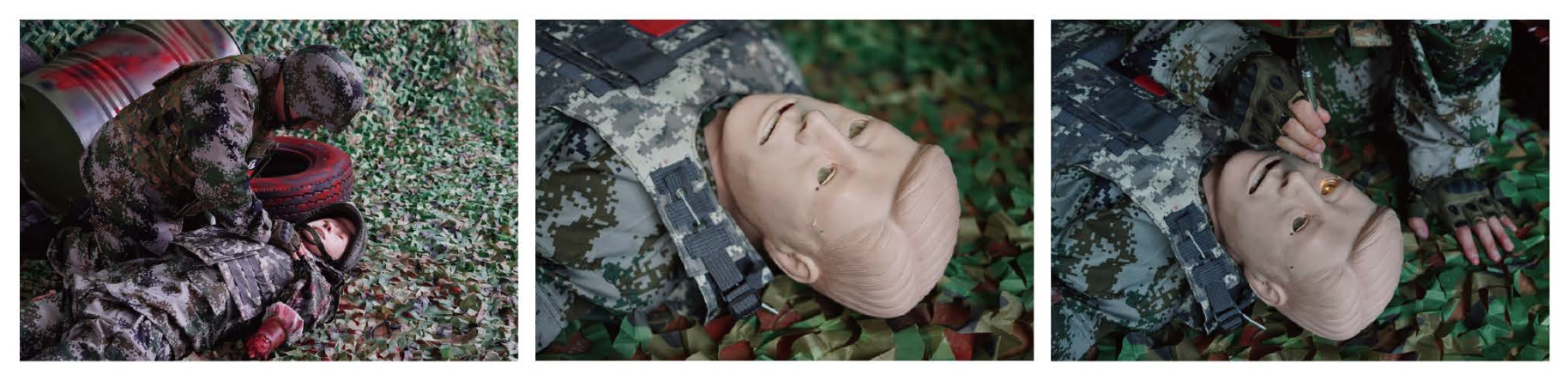
The system meets the requirements for providing a comprehensive solution for delivering first aid in field conditions. It is operated via a wireless tablet and can display various vital signs, as well as provide physical examination, autonomous breathing, voice intercom, crying and sweating, autonomous bleeding, etc.
The system also performs the following functions:
- Providing first aid (controlling bleeding, bandaging, immobilization, transportation, ventilation, fracture fixation)
- Specialized treatment
- Protection against radiation damage
Training in general and team actions allows for effective improvement of emergency medical care delivery in field conditions.
WIRELESS COMMUNICATION
- Control via a wireless tablet
- The tablet allows editing training scenarios
- Free control of the simulation system via the wireless tablet
- Built-in battery (up to 10 hours in standby mode)
USE OF MEDICAL DEVICES
- Real defibrillator
- Real 12-lead ECG machine
- Real mechanical ventilator
- Infusion pumps, syringe pumps
PHYSIOLOGICAL FUNCTIONS
- Built-in respiratory system providing autonomous breathing
- Modeling various types of breathing
- Blinking of both eyes, pupil reaction to light (direct and indirect)
- Neurological examination (Oppenheim's sign, Babinski's sign, knee reflex)
- Auscultation of the heart and lungs, arterial pulsation
ADAPTATION TO EXTREME CONDITIONS
- Passed high temperature test (46°C)
- Passed low temperature test (0°C)
- Passed drop test (from a height of 2 m)
- Passed rain test (simulating a half-hour downpour)
Key First Aid Functions on the Battlefield
Training and Assessment of CPR (Cardiopulmonary Resuscitation)
The assessment and training mode is optional, with voice prompts for errors. After successful CPR, the simulator restores spontaneous breathing, arterial pulsation, and the pupils return to normal after dilation.
- In training mode, the resuscitation process is reproduced, displaying pressure sizes and types of ventilation.
- In assessment mode, voice prompts are absent, and the operation concludes with automatically generated transcripts that can be printed.
Training in Controlling Bleeding and Hemostasis
The model allows for quick changes of injured limbs (amputation of upper and lower limbs).
The injured limb contains the brachial artery, radial artery, popliteal artery, dorsal artery of the foot, as well as venous and arterial connections that can be connected to various traumatic modules.
This allows simulating rescue and treatment of surgical injuries, orthopedic injuries, combat wounds, and burns.
🔹 The speed and volume of bleeding can be adjusted through software, where arterial bleeding is linked to the simulator's heart rate.
🔹 The system can monitor and display blood loss volume in real-time.
Moving and Transporting the Injured
- The simulator's arms and legs have flexible joints and can be positioned in any position.
- The abdomen is movable, allowing for modeling sitting, lying (on the back, on the stomach), and other positions.
- Manual transportation of the injured is possible.
- Transporting on stretchers.
- Transportation methods:
- One rescuer supports the injured
- One rescuer carries the injured on their shoulders
- One rescuer drags the injured
- Two rescuers carry the injured
- Three rescuers carry the injured
- Group transportation
Methods of Airway Management
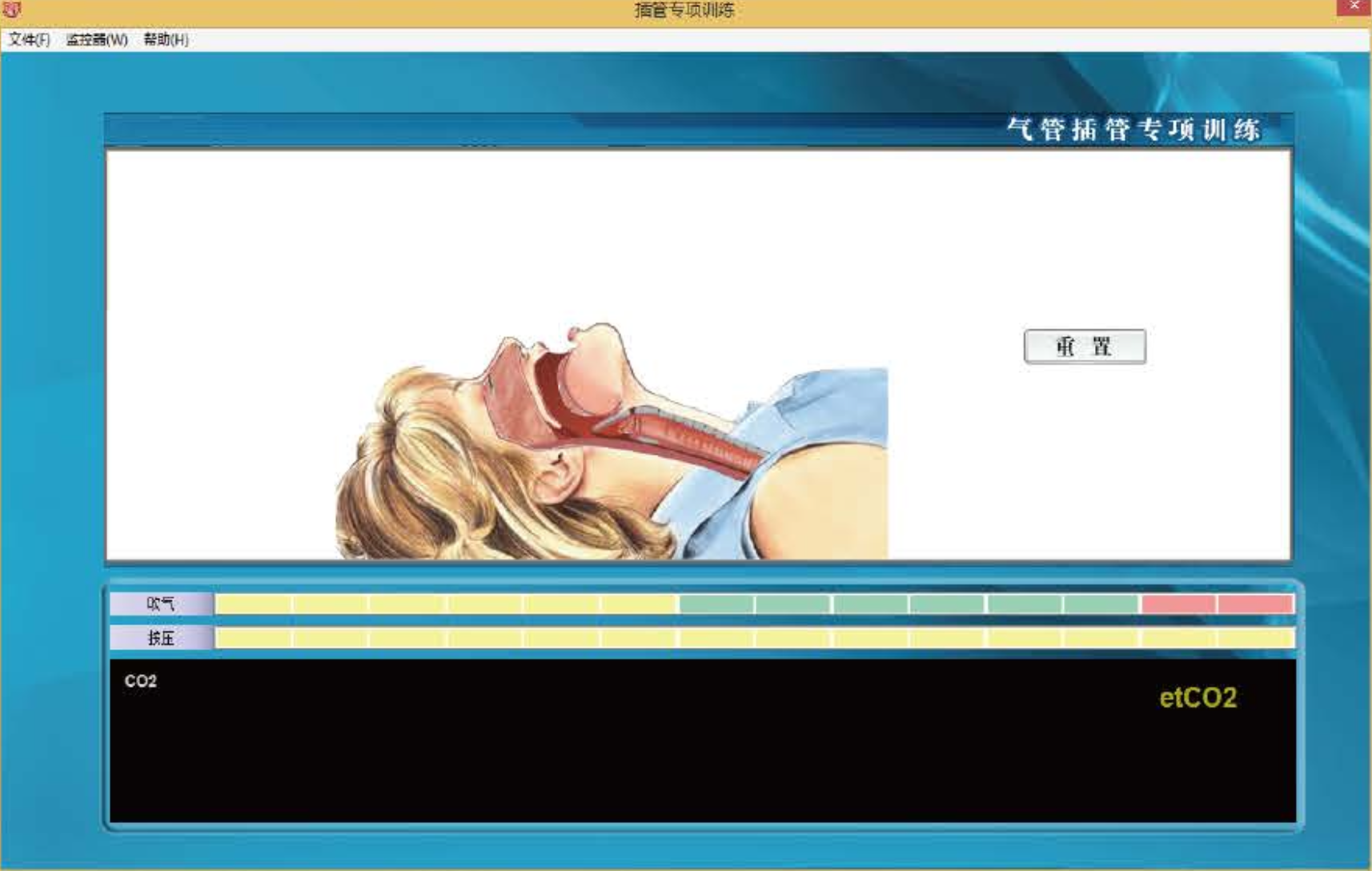
- Standard intubation of the trachea via the mouth and nose, displaying graphics on the screen and voice prompts for error messages.
- The simulator displays changes in condition during manipulations, allowing practice of laryngeal mask placement.
- Can be connected to a clinical ventilator.
- Auscultation is supported to verify the correctness of intubation.
- Simulation of unilateral and bilateral airway obstruction, tongue swelling, laryngospasm, etc.
- The simulator automatically determines whether the operator's actions are correct and sends signals to the wireless tablet for recording, helping create physiological and pathological responses of the patient.
All Types of Intubation for Complex Airway Management
Monitoring proper head position, ability to ventilate, inability to ventilate/intubate, tongue swelling, pharyngeal obstruction, laryngospasm, limited neck mobility, teeth clenching.
- Manually controlled or automatic opening/closing of the airway
- Support for head tilt and jaw thrust
- Aspiration through oropharyngeal and nasopharyngeal tubes
- Ventilation via mask
- Intubation through a special port
- Nasogastric intubation
- Ventilation via laryngeal mask and other devices
- Endotracheal intubation
- Retrograde intubation
- Fiberoptic intubation
- Ventilation via tracheostomy
- Cricoidotomy (puncture and incision)
Real-Time Human-Computer Interaction During Intubation
- A synchronized sensor allows monitoring the position of the cannula and evaluating its placement in real-time through software during intubation.