A New Era in Brain Treatment
In recent decades, approaches to the treatment of psychoneurological disorders have changed dramatically. For a long time, pharmacotherapy remained the main tool, which, unfortunately, is often accompanied by side effects or proves ineffective (up to 30–40% of patients with depression have pharmacoresistant forms).
Transcranial magnetic stimulation (TMS) is an innovative technology that allows for "communication" with the brain in its own language — the language of electrical and magnetic signals. Without surgical intervention and without systemic effects on the body, TMS enables the restoration of lost neural connections and normalizes the functioning of brain centers.
How does TMS work? The physics and biology of the method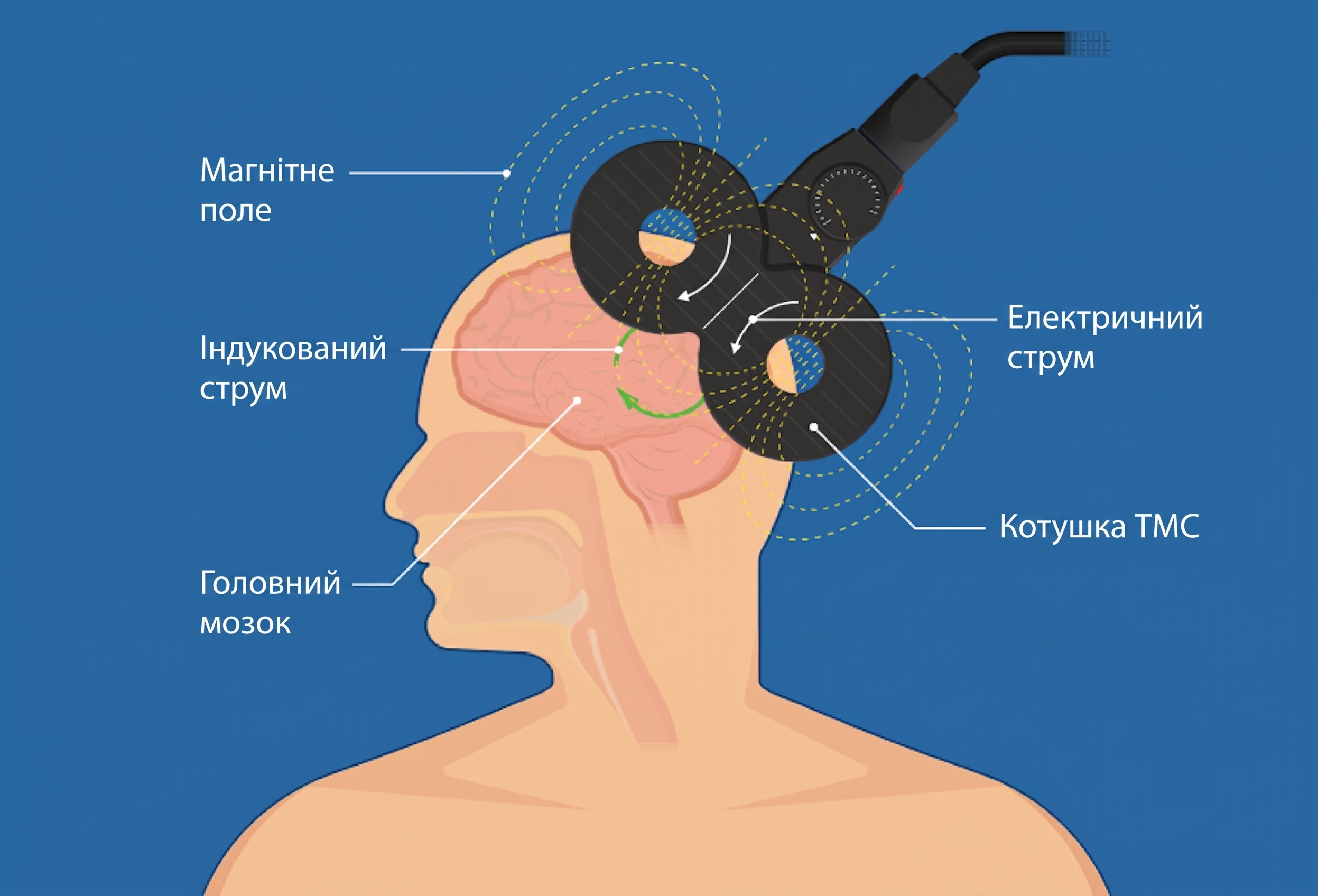
The operation of TMS devices is based on Faraday's law of electromagnetic induction. A special coil (inductor) applied to the patient's head generates a high-intensity but short-lived magnetic pulse.
- Unobstructed penetration: the magnetic field easily and painlessly passes through the skin, muscles, and skull bones.
- Focal induction: reaching the cerebral cortex, the magnetic field induces weak electrical currents in neurons.
- Modulation of activity: depending on the frequency of the pulses (from 0.1 to 100 pps), TMS can activate suppressed areas of the brain or inhibit hyperactive zones.
- Neuroplasticity: repeated sessions stimulate the brain to form new synaptic connections (neuroplasticity), providing a long-lasting therapeutic effect.
Indications for TMS therapy
Due to its strong evidence base, TMS is actively used in three key areas of medicine:
1. Psychiatry and mental health
- Pharmacoresistant depression: treatment of patients who do not receive relief from antidepressants.
- PTSD and anxiety disorders: reduction of hyperactivity in the amygdala and stabilization of emotional state.
- Obsessive-compulsive disorder (OCD): correction of intrusive thoughts and actions.
- Phantom pain: reduction of pathological pain memory.
2. Neurology
- Chronic and neuropathic pain, migraines: normalization of pain signal transmission.
- Multiple sclerosis: reduction of muscle spasticity and improvement of motor control.
- Tinnitus: reduction of the intensity of constant noise in the ears.
3. Neurorehabilitation after strokes and injuries
- Restoration of speech (aphasia): stimulation of the language areas of the cortex.
- Motor rehabilitation: improvement of mobility in the upper and lower limbs through activation of the motor cortex.
- Cognitive rehabilitation: improvement of memory, attention, and concentration.
How does the TMS procedure go for the patient?
- Safe and painless:
the patient comfortably sits in a chair. The procedure does not require anesthesia or sedation.
- Sensation:
during the session, the patient hears light clicks and feels rhythmic tapping in the area where the coil is applied.
- No rehabilitation period:
immediately after the session (lasting 15–30 minutes), the patient can return to normal life, drive a car, or work.
TMS devices from REMED - engineering excellence for your clinic
The South Korean manufacturer REMED (Rehabilitation Medical Company) is one of the recognized global leaders in the field of electromagnetic stimulation. KIM Medical offers two flagship systems.
Comparative characteristics table: BrainStim vs ALTMS
| Parameter | REMED BrainStim 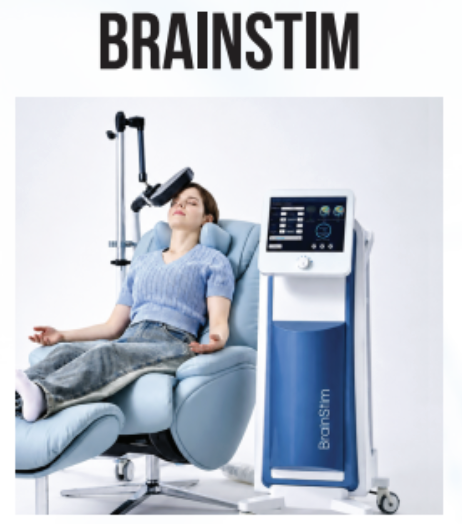
| REMED ALTMS 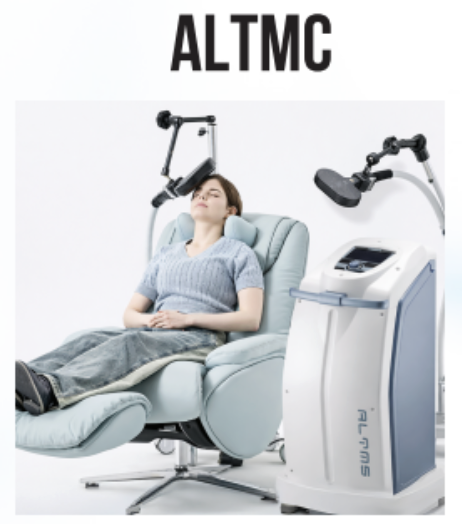
|
| Magnetic field strength | Up to 3.0 T (maximum depth and effectiveness) | Up to 2.5 T (gold clinical standard) |
| Stimulation frequency | 0.1 – 100 pps (supports iTBS/cTBS protocols) | 0.1 – 100 pps |
| Cooling system | Combined (water-air/rare) | Oil-based |
| Throughput | 8–10 sessions in a row without cooling pauses | 4–5 sessions in a row |
| Motor threshold determination (MT) | Automatic + manual | Manual |
| Coils | 3 interchangeable coils (Plug & Play system) | Ergonomic 8-shaped coil |
| Field of application | Large medical centers, scientific institutes, intensive rehabilitation departments | Private clinics, neurological and psychiatric offices |
3D-Neuronavigation from REMED: "GPS" for the brain
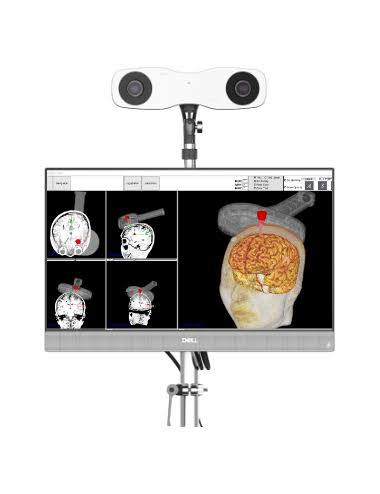 The best equipment requires maximum precision. Standard coil application "based on anatomical landmarks" introduces error. The 3D-neuronavigation system from REMED completely resolves this issue:
- MRI integration: the system imports the patient's personal 3D MRI images.
- Real-time optical tracking: cameras monitor the position of the patient's head and inductor with sub-millimeter accuracy (< 1 mm).
- 100% reproducibility: the doctor is guaranteed to hit the same pathological area from the first to the last session.
- Increased effectiveness: according to studies, the use of neuronavigation increases the clinical effect of TMS therapy by up to 40%.
- Synergy of technologies: combination of TMS and Neurofeedback (EEG Biofeedback)
To achieve maximum results in mental health rehabilitation, KIM Medical recommends combining TMS stimulation with biological feedback methods (EEG Biofeedback from ELMIKO):
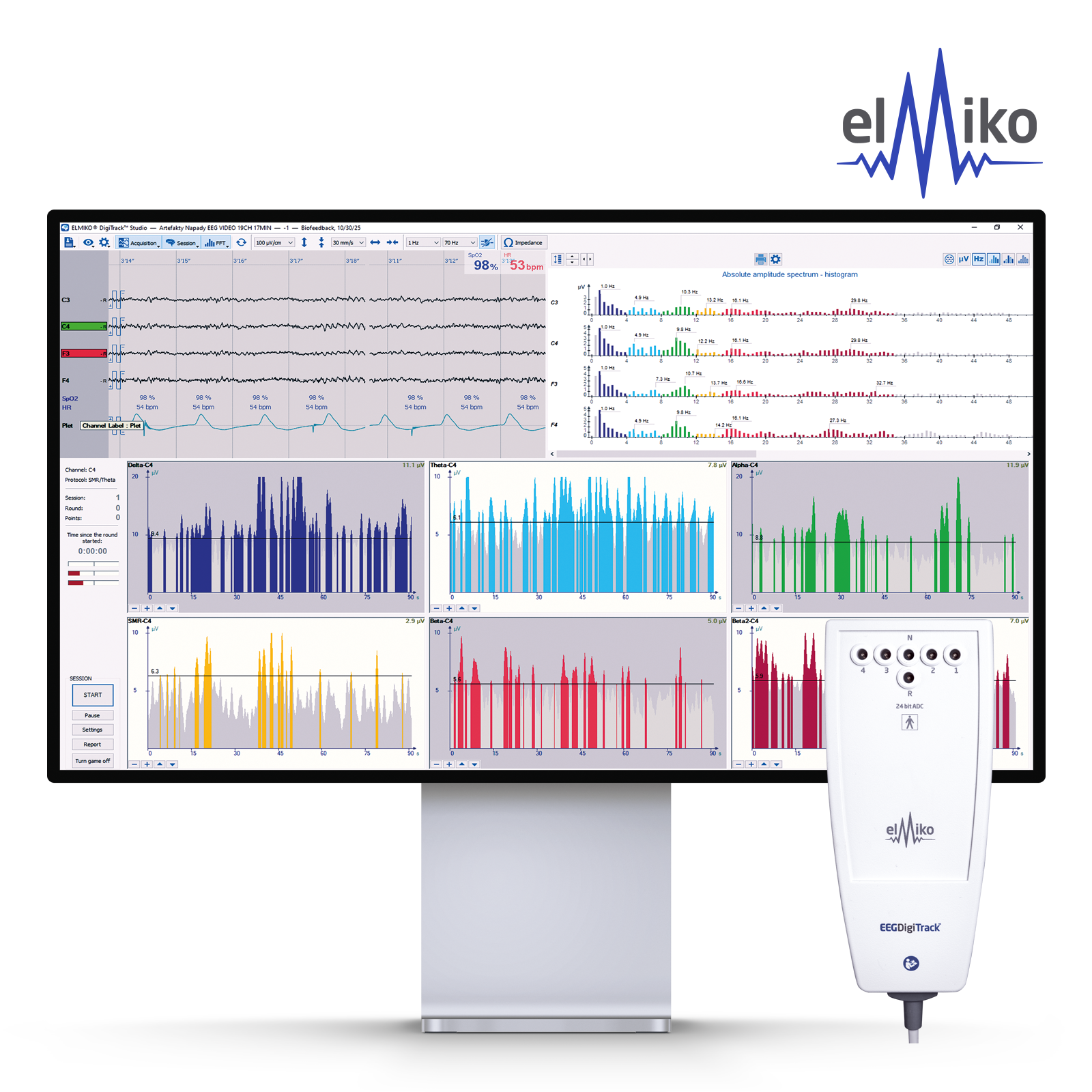
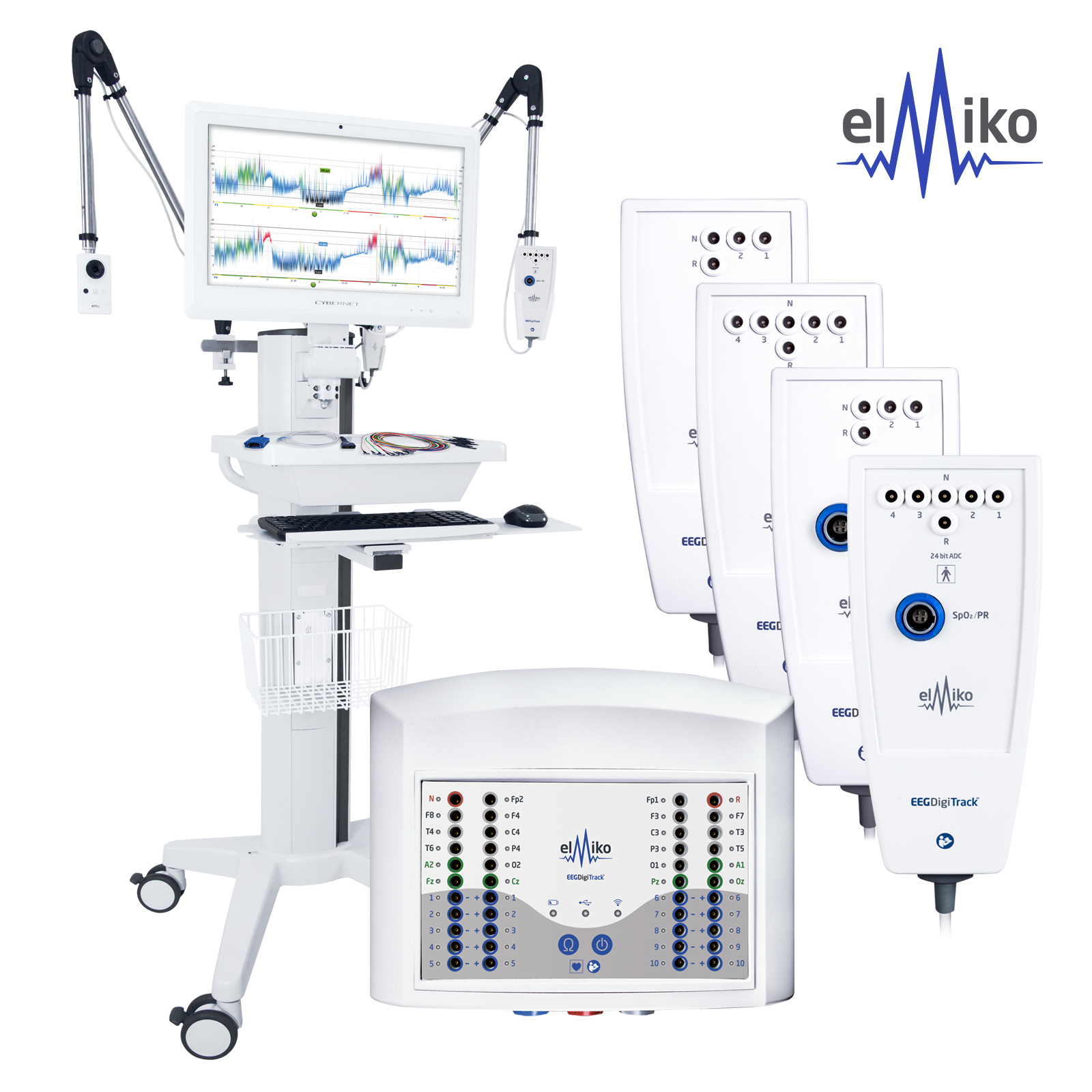
- EEG diagnostics (for example, 32-channel ExG32 basicEEG KIT): allows for the detection of pathological brain rhythms and preparation of an accurate protocol for TMS.
- TMS stimulation (BrainStim / ALTMS): actively normalizes the functioning of neural networks at the physical level.
- Neurofeedback (EEGDigiTrack): teaches the patient to independently maintain and consolidate a healthy state of brain self-regulation (attention training, anxiety reduction).
Business advantages: Why does your clinic need a TMS device?
- Entry into a new market: demand for mental health rehabilitation and consequences of trauma/PTSD in Ukraine is growing every day.
- Competitive advantage: the presence of a high-tech complex (TMS + Neuronavigation) distinguishes your clinic from competitors.
- High patient LTV: TMS therapy is conducted in courses (from 10 to 20–30 sessions), ensuring a stable flow of visits and high return on investment for the equipment.
- Safety and minimal requirements: the operation of the device does not require special protective rooms (as for MRI or X-ray).
Ready solutions from KIM Medical
KIM Medical provides a complete cycle of implementing TMS technologies in your medical institution:
- Official supplies of REMED equipment with certification.
- Setup, calibration, and integration with neuronavigation systems.
- Training for neurologists, psychiatrists, and rehabilitation specialists.
- Warranty and service support 24/7.
Order a consultation and calculation of the return on investment for TMS equipment for your clinic today!